Op-Ed Columnist - Are We Home Alone? - NYTimes.com: "And you will ensure that we’ll never get out of this banking crisis, because the solution depends on getting private money funds to team up with the government to buy up toxic assets — and fund managers are growing terrified of any collaboration with government."
Huh!...
My only quarrel with the article is the apparent assumption that the plan the government appears to be poised to announce is the obviously best and only game in town...
Once more, Mr. Friedman, would you read this?
Sunday, March 22, 2009


A Medical Madoff: Anesthesiologist Faked Data in 21 Studies: Scientific American
A Medical Madoff: Anesthesiologist Faked Data in 21 Studies: Scientific American
As I was going through the French edition of this article in Le Monde, it hit me once again that the present crisis is also at a deeper level a crisis of defect in the structure of means of attribution of credit that is not limited to finance, but that extend to all learned fields of knowledge in the upper echelons of society.
I have refused to play the "gaming the system" strategy for I believe sooner or later things in such games fall apart.
This gives me hope that someday those who stood up to look for the truth and claim it no matter what the price may receive their due.
Someday, somewhere over the rainbow...
As I was going through the French edition of this article in Le Monde, it hit me once again that the present crisis is also at a deeper level a crisis of defect in the structure of means of attribution of credit that is not limited to finance, but that extend to all learned fields of knowledge in the upper echelons of society.
I have refused to play the "gaming the system" strategy for I believe sooner or later things in such games fall apart.
This gives me hope that someday those who stood up to look for the truth and claim it no matter what the price may receive their due.
Someday, somewhere over the rainbow...
Saturday, March 21, 2009
Toxic Asset Plan Foresees Big Subsidies for Investors - NYTimes.com
Toxic Asset Plan Foresees Big Subsidies for Investors - NYTimes.com
Moronic disgrace.
Design complexity here is no substitute for discernment.
I cry a river over this.
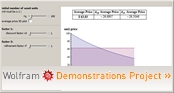
See: http://knol.google.com/k/phil-kongtcheu/fair-value-pricing-government-market/
Moronic disgrace.
Design complexity here is no substitute for discernment.
I cry a river over this.
See: http://knol.google.com/k/phil-kongtcheu/fair-value-pricing-government-market/
Senators Debate Fed's Role in Overseeing Systemic Risk - WSJ.com
Senators Debate Fed's Role in Overseeing Systemic Risk - WSJ.com
Reasonable debate to have. In my book BICs 4 Derivatives Volume I : Theory
(Chapter VIII, pp 192-195), I argued for a central counterparty organization as counterparty of reference on all trades which guarantees the payment of contractual agreements on both sides of a transaction.
The systemic risk overseeing entity should act as central counterparty of reference on all trades whose default may pose a systemic risk or act as a regulator and guarantor of last resort to private entities (exchanges, clearing houses,...) who play such a role.
As a guarantor of last resort, this entity may be best within FDIC; As guarantor of credibility through the power to print money, this entity may be best within the Central Bank authority. What is most important in my view is that its function be articulated as proposed above.
Reasonable debate to have. In my book BICs 4 Derivatives Volume I : Theory
(Chapter VIII, pp 192-195), I argued for a central counterparty organization as counterparty of reference on all trades which guarantees the payment of contractual agreements on both sides of a transaction.
The systemic risk overseeing entity should act as central counterparty of reference on all trades whose default may pose a systemic risk or act as a regulator and guarantor of last resort to private entities (exchanges, clearing houses,...) who play such a role.
As a guarantor of last resort, this entity may be best within FDIC; As guarantor of credibility through the power to print money, this entity may be best within the Central Bank authority. What is most important in my view is that its function be articulated as proposed above.
Thursday, March 19, 2009
Fed Will Inject $1 Trillion More Into the Economy - NYTimes.com
Fed Will Inject $1 Trillion More Into the Economy - NYTimes.com
Not bad. But I think a but in a more structurally efficient way, the fed would expend less and achieve the goal of curbing long term rates if it made markets on overnight functional notionals BICs-FRAs along the term structure. Since this would recompose into long term bonds without immediately disbursing the cash needed to purchase long term bonds, it would use less capital.
In 2005 when the fed was desperately trying to raise long term rates to dampen speculation on mortgages, but considering it prohibitively expensive to get into the business of selling long term bonds, I volunteered a piece to the NYT and WSJ explaining how BICs might help do this efficiently. No one was interested.
Still, policy makers have not figured this one out...What else can I do?
Not bad. But I think a but in a more structurally efficient way, the fed would expend less and achieve the goal of curbing long term rates if it made markets on overnight functional notionals BICs-FRAs along the term structure. Since this would recompose into long term bonds without immediately disbursing the cash needed to purchase long term bonds, it would use less capital.
In 2005 when the fed was desperately trying to raise long term rates to dampen speculation on mortgages, but considering it prohibitively expensive to get into the business of selling long term bonds, I volunteered a piece to the NYT and WSJ explaining how BICs might help do this efficiently. No one was interested.
Still, policy makers have not figured this one out...What else can I do?
Wednesday, March 18, 2009
Financial Journalists Fail Upward - WSJ.com
Financial Journalists Fail Upward - WSJ.com
Dear Mr. Frank:
I loved your piece, loved it, loved it. As the late poet Aime Cesaire once said for himself, in this piece "your mouth is the mouth of the mouthless and your voice, the liberty of those whose voice rests in the dungeons of despair"
I am one of those marginalized, laboring at out-of-the-way blogs. I have been and I am still excluded and ridiculed because my larger understanding of the economy was and is not one that fit well with the sort of Wall Street or academia worship preached by the likes of CNBC.
I published my book in 2005 questioning the mathematics underlying derivatives risk management, the systemic risk they posed and proposing an alternative.
In this crisis I feel that better than anyone I have heard so far I know how to most effectively get us out of this crisis stronger, faster at the least cost. I spent a decade working precisely on this.
On the most pressing issue of the day, how to deal with the toxic assets clogging the system, I have tried without success for two months now to have this published in the NY Times or the WSJ to attract the attention of decision makers. I know the public/private plan the administration seem set on adopting is going to be very expensive for taxpayers while fattening pockets of financiers. No one seems to realize how a government market making approach is simpler and more efficient. I have seen so far no one discussing that possibility
Check my blog at http://kongtcheu.blogspot.com/
Anyway, Thank you.
Your piece made me feel less lonely for a moment,
Phil Kongtcheu
Dear Mr. Frank:
I loved your piece, loved it, loved it. As the late poet Aime Cesaire once said for himself, in this piece "your mouth is the mouth of the mouthless and your voice, the liberty of those whose voice rests in the dungeons of despair"
I am one of those marginalized, laboring at out-of-the-way blogs. I have been and I am still excluded and ridiculed because my larger understanding of the economy was and is not one that fit well with the sort of Wall Street or academia worship preached by the likes of CNBC.
I published my book in 2005 questioning the mathematics underlying derivatives risk management, the systemic risk they posed and proposing an alternative.
In this crisis I feel that better than anyone I have heard so far I know how to most effectively get us out of this crisis stronger, faster at the least cost. I spent a decade working precisely on this.
On the most pressing issue of the day, how to deal with the toxic assets clogging the system, I have tried without success for two months now to have this published in the NY Times or the WSJ to attract the attention of decision makers. I know the public/private plan the administration seem set on adopting is going to be very expensive for taxpayers while fattening pockets of financiers. No one seems to realize how a government market making approach is simpler and more efficient. I have seen so far no one discussing that possibility
Check my blog at http://kongtcheu.blogspot.com/
Anyway, Thank you.
Your piece made me feel less lonely for a moment,
Phil Kongtcheu
Sunday, March 15, 2009
TALF Is Reworked After Investors Balk - WSJ.com
TALF Is Reworked After Investors Balk - WSJ.com
This subsidized lending program just looks like major league subsidy to the securities industry with layers of transaction costs that incentivize people to trade in potentially irrational way with cheap money and are likely to contribute to TARP assets price inflation . Why not just do market making as I have repeatedly suggested?
The key mistake here is that policy makers seem to confuse
- incentivizing trade on securities with high economic impact which should be the mission of the government here and would lead to a more rational underwriting industry practices going forward
vs
- encouraging the potential reckless issuance of new securities which may in fact perpetuate the practices that led to this mess.
This subsidized lending program just looks like major league subsidy to the securities industry with layers of transaction costs that incentivize people to trade in potentially irrational way with cheap money and are likely to contribute to TARP assets price inflation . Why not just do market making as I have repeatedly suggested?
The key mistake here is that policy makers seem to confuse
- incentivizing trade on securities with high economic impact which should be the mission of the government here and would lead to a more rational underwriting industry practices going forward
vs
- encouraging the potential reckless issuance of new securities which may in fact perpetuate the practices that led to this mess.
Friday, March 13, 2009
John Stewart Vs. Jim Cramer
The Daily Show with Jon Stewart | Stewart vs. Cramer:
A few thoughts:
1) "Is collective responsibility an alibi?"
This topic of my high school philosophy dissertation exam seems to me like something that out to be debated or revisited here. All the culprits in the present crisis seem to think collective responsibility is an alibi. I differ.
How at the very least about a journalistic or governmental effort to search and single out the heroes?
2) "It is much easier for a man to fail conventionally than to stand against the crowd and speak the truth" John Maynard Keynes
The usual expectation is that the one(s) who stood against the crowd and spoke the truth at great cost to themselves would reap the benefits when convention fails.
Painful as it was to watch for Mr. Cramer, I suspect he is still going to be having his show and make even more money "head he wins, tail you loose".
I have spent a decade on BICs, and BICs would have helped and can still help get out of this... And here am I, just as pitiful, out of the public sight and out of the public mind.
Where is the morality of all of this?
3) Is it time to debunk the Financial Investment Equity Risk Premium Fallacy
which says over the long term stocks outperform bonds?
(1976 Ibbotson Brinson) .See also:
http://www.dailyspeculations.com/scholarly/LongTermStockReturns.html
http://corporate.morningstar.com/ib/documents/MethodologyDocuments/IBBAssociates/IntnlRiskPremium.pdf
How about saying "Lies, damned lies, and statistics"
I bet that buying government I-Bond (inflation bonds) would yield a better return net of management fees and taxes than the large majority of index funds.
But saying that would destroy the entire financial advisory industry. So let's keep it quiet....
4) Finance and Economics is a complex and serious business that must be handled with nuance, intellectual sophistication that can sound very boring to simply minded persons; by attempting to be simplistic and entertaining to attract huge audiences, CNBC & Cramer dig for themselves huge holes in which they ultimately fall
The Stewart clip evidence against Cramer:
CARLY SIMON - YOU'RE SO VAIN referred to by stewart in the interview
A few thoughts:
1) "Is collective responsibility an alibi?"
This topic of my high school philosophy dissertation exam seems to me like something that out to be debated or revisited here. All the culprits in the present crisis seem to think collective responsibility is an alibi. I differ.
How at the very least about a journalistic or governmental effort to search and single out the heroes?
2) "It is much easier for a man to fail conventionally than to stand against the crowd and speak the truth" John Maynard Keynes
The usual expectation is that the one(s) who stood against the crowd and spoke the truth at great cost to themselves would reap the benefits when convention fails.
Painful as it was to watch for Mr. Cramer, I suspect he is still going to be having his show and make even more money "head he wins, tail you loose".
I have spent a decade on BICs, and BICs would have helped and can still help get out of this... And here am I, just as pitiful, out of the public sight and out of the public mind.
Where is the morality of all of this?
3) Is it time to debunk the Financial Investment Equity Risk Premium Fallacy
which says over the long term stocks outperform bonds?
(1976 Ibbotson Brinson) .See also:
http://www.dailyspeculations.com/scholarly/LongTermStockReturns.html
http://corporate.morningstar.com/ib/documents/MethodologyDocuments/IBBAssociates/IntnlRiskPremium.pdf
How about saying "Lies, damned lies, and statistics"
I bet that buying government I-Bond (inflation bonds) would yield a better return net of management fees and taxes than the large majority of index funds.
But saying that would destroy the entire financial advisory industry. So let's keep it quiet....
4) Finance and Economics is a complex and serious business that must be handled with nuance, intellectual sophistication that can sound very boring to simply minded persons; by attempting to be simplistic and entertaining to attract huge audiences, CNBC & Cramer dig for themselves huge holes in which they ultimately fall
The Stewart clip evidence against Cramer:
CARLY SIMON - YOU'RE SO VAIN referred to by stewart in the interview
Thursday, March 12, 2009
Charlie Rose - A conversation with Timothy Geithner, U.S. Treasury Secretary
Charlie Rose - A conversation with Timothy Geithner, U.S. Treasury Secretary
In this interview he made a lot of sense. His enunciation of principles is coherent; however the actual tools to effect those principles, while not entirely unacceptable are not always the most effective I would think of.
"Ars sine scientia nihil est"
For example, when he is talking about doing the private public partnership to unclog tarp assets . They are going to lend money to private investors so that the can go and buy tarp assets. The contention I have repeatedly made is: why would this be better than setting up a market making operation on those assets traded at a refined level of granularity?
In this interview he made a lot of sense. His enunciation of principles is coherent; however the actual tools to effect those principles, while not entirely unacceptable are not always the most effective I would think of.
"Ars sine scientia nihil est"
For example, when he is talking about doing the private public partnership to unclog tarp assets . They are going to lend money to private investors so that the can go and buy tarp assets. The contention I have repeatedly made is: why would this be better than setting up a market making operation on those assets traded at a refined level of granularity?
Monday, March 9, 2009
Mathematical Model and the Mortgage Mess - NYTimes.com
Mathematical Model and the Mortgage Mess - NYTimes.com
Yes, BICs 4 Derivatives Volume I : Theory chapter IX pp 203-232, showed that this was faulty and proposed the coherent alternative. When will you wake up people? when?
I cry a river over this. I cry a river over this....
As I have described at length in other writings(See this or this ), this crisis was a failure of the existing mathematical modeling framework at describing the real world dynamics of underlyings. Therefore the corresponding hedging and risk management strategies failed to represent reality and this fact becomes most obvious at times of crisis. One of the reasons for this development is the over-representation of former physicist at the highest levels of "quantdom" who have forced the adoption of a framework coming from another world. But "It ain't physics". It just ain't.
And I cry a river over this. I just cry a river over this....
Yes, BICs 4 Derivatives Volume I : Theory
chapter IX pp 203-232, showed that this was faulty and proposed the coherent alternative. When will you wake up people? when?I cry a river over this. I cry a river over this....
As I have described at length in other writings(See this or this ), this crisis was a failure of the existing mathematical modeling framework at describing the real world dynamics of underlyings. Therefore the corresponding hedging and risk management strategies failed to represent reality and this fact becomes most obvious at times of crisis. One of the reasons for this development is the over-representation of former physicist at the highest levels of "quantdom" who have forced the adoption of a framework coming from another world. But "It ain't physics". It just ain't.
And I cry a river over this. I just cry a river over this....
Subscribe to:
Posts (Atom)